
gynecology
The IUD: Your Complete Guide
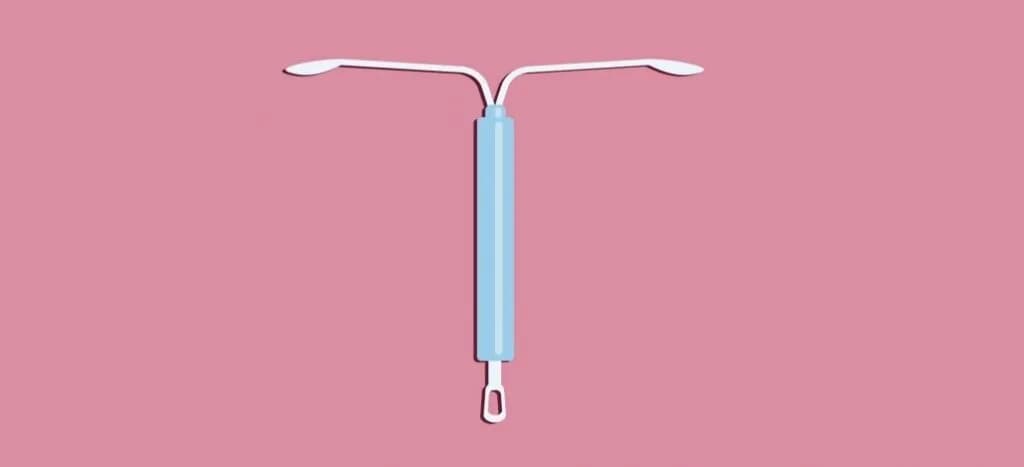
The intrauterine device is among the most effective contraception available — over 99% effective, comparable to sterilisation, and it works without you having to do anything once it is in place.
First, a correction
An earlier version of this page stated that hormonal IUDs "were removed from the market in the early 2000s due to health concerns" and that only non-hormonal devices remain available. That is false, and we are correcting it in the open because someone may have made a decision based on it.
Hormonal IUDs are FDA-approved, widely used, and among the most popular reversible contraceptives in the United States. Mirena has been on the US market since 2000 and has never been withdrawn. The same page also listed Mirena and Skyla as "non-hormonal," which is backwards — both are hormonal.
Here is the correct picture.
The two types
Hormonal IUDs (levonorgestrel)
Release a small amount of progestin locally in the uterus. Very little reaches the bloodstream compared with pills.
- Mirena — approved for up to 8 years. Also FDA-approved to treat heavy menstrual bleeding.
- Liletta — approved for up to 8 years.
- Kyleena — approved for up to 5 years. Smaller frame and a lower hormone dose.
- Skyla — approved for up to 3 years. The smallest frame and dose.
Periods usually become much lighter. Many users stop having periods altogether after the first year, which is expected and not harmful.
Copper IUD (Paragard)
Contains no hormones at all. Copper ions make the uterine environment hostile to sperm.
- FDA-approved for 10 years, with evidence supporting effectiveness up to 12.
- The only option for someone who wants or needs to avoid hormones entirely.
- Also the most effective form of emergency contraception — over 99% effective when inserted within 5 days of unprotected sex, and far more effective than any emergency pill.
- Periods often become heavier and crampier, particularly in the first several months. This is the main reason people discontinue it.
Which one should I choose?
Roughly:
- Heavy or painful periods → a hormonal IUD, and Mirena specifically carries an FDA indication for heavy bleeding.
- Want to avoid hormones, or want the longest duration → copper.
- Need emergency contraception that then continues as ongoing contraception → copper.
- Already have heavy periods → copper is usually the wrong choice.
What is insertion actually like?
Honest answer: it is brief, and for many people it hurts.
The whole procedure takes a few minutes. The cervix is visualised with a speculum, the uterus is measured, and the device is placed through the cervical canal. Most of the discomfort is a strong cramping sensation lasting seconds during placement and measurement.
Pain varies enormously and is not well predicted by whether you have given birth. Ask about pain management in advance — the conversation has changed in recent years, and options include NSAIDs beforehand, a paracervical block, and topical lidocaine. In 2024 the CDC updated its guidance to say that lidocaine should be discussed with patients. You are entitled to have this addressed rather than told it is "just a pinch."
Cramping and spotting for a few days afterwards are normal. Bring a pad; arrange an easy rest of the day if you can.
Risks, accurately stated
- Expulsion — the device partially or fully coming out, in roughly 2–10% of users, most often in the first year and more likely with heavy periods. Check for the strings periodically.
- Perforation — rare, around 1 in 1,000 insertions, and higher while breastfeeding.
- Pelvic infection — the risk is slightly raised only in the first 20 days after insertion, and reflects pre-existing infection at the time of placement rather than the device itself. There is no ongoing elevated PID risk from having an IUD, which is a persistent myth from the 1970s Dalkon Shield.
- Ectopic pregnancy — an IUD dramatically reduces overall pregnancy risk, but if pregnancy does occur, it is more likely to be ectopic. Any positive pregnancy test with an IUD in place needs prompt assessment.
An IUD does not cause abnormal Pap smears. The earlier version of this page listed that as a downside; it is not a real effect and has been removed.
Things an IUD does not do
- It does not protect against STIs. Use condoms for that.
- It does not affect future fertility. Fertility returns essentially immediately after removal.
- It is not "not for people who haven't had children" — ACOG and the CDC recommend IUDs as first-line contraception for adolescents and nulliparous people.
- It is not felt by you day to day, and should not be felt by a partner beyond possibly the strings.
When to call us
- Fever, worsening pelvic pain, or foul-smelling discharge in the weeks after insertion
- Strings that feel much longer, much shorter, or absent
- Feeling the hard plastic of the device itself at the cervix
- A positive pregnancy test
- Bleeding that soaks through a pad an hour
Getting an IUD in Chicago
We place and remove both types, and we will talk through which fits your periods, your plans, and your medical history rather than defaulting to one.
- Birth control consultation
- How birth control works — all methods compared
- Book an appointment online
Medical disclaimer
This article is general health information, not medical advice for any individual. Which contraceptive suits you depends on your own history and preferences. A positive pregnancy test with an IUD in place, or severe pelvic pain, needs same-day assessment.