
gynecology
Polycystic Ovary Syndrome (PCOS): Diagnosis, Phenotypes, and Treatment
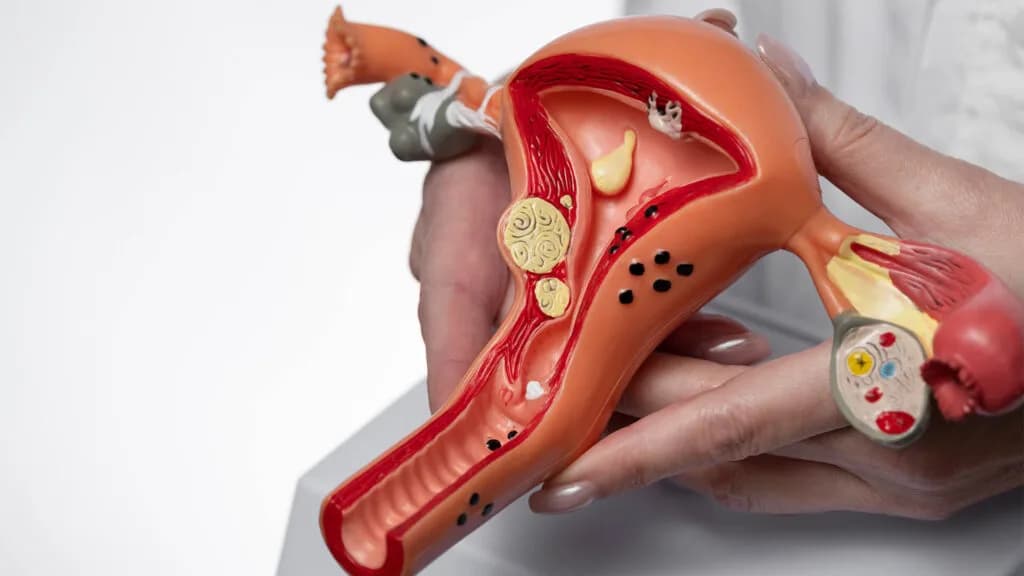
Polycystic ovary syndrome affects roughly 8–13% of women of reproductive age, and a large proportion are undiagnosed. It is the most common cause of anovulatory infertility, and it is a metabolic condition as much as a gynecological one.
A correction first. An earlier version of this page described "three types of PCOS — type I, type II, and non-classical." That classification does not exist. It was not a simplification of a real system; it was invented, and it conflated PCOS with an entirely different condition. The accurate framework is below.
How PCOS is actually diagnosed
Diagnosis uses the Rotterdam criteria: two of the following three, with other causes excluded.
- Ovulatory dysfunction — irregular or absent periods. Typically cycles longer than 35 days, fewer than 8 periods a year, or none.
- Hyperandrogenism — either clinical (hirsutism, acne, male-pattern hair thinning) or biochemical (raised free testosterone).
- Polycystic ovarian morphology on ultrasound — a high antral follicle count or increased ovarian volume.
Two important points that surprise people:
- You do not need cysts to have PCOS. The name is a misnomer. Those follicles are not cysts, and around a quarter of people with PCOS have normal-appearing ovaries.
- Ultrasound should not be used for diagnosis within 8 years of the first period, because multifollicular ovaries are normal in adolescence. In adolescents, diagnosis rests on irregular cycles plus hyperandrogenism.
Anti-Müllerian hormone (AMH) is increasingly accepted as an alternative to ultrasound for the morphology criterion in adults.
The four phenotypes
This is the real classification — phenotypes A through D, defined by which criteria are met:
- Phenotype A — hyperandrogenism + ovulatory dysfunction + polycystic morphology. The "classic" full presentation, and generally the most metabolically affected.
- Phenotype B — hyperandrogenism + ovulatory dysfunction, normal ovaries.
- Phenotype C ("ovulatory PCOS") — hyperandrogenism + polycystic morphology, with regular ovulation.
- Phenotype D ("non-hyperandrogenic") — ovulatory dysfunction + polycystic morphology, without excess androgens. Generally the mildest metabolic profile.
Phenotype matters because metabolic risk and fertility implications differ across them.
What must be excluded first
PCOS is a diagnosis of exclusion, and this is the step most often skipped:
- Thyroid disease — TSH
- Hyperprolactinemia — prolactin
- Non-classic congenital adrenal hyperplasia (NCCAH) — 17-hydroxyprogesterone, drawn in the morning
- Cushing's syndrome and androgen-secreting tumours, where onset is rapid or androgen levels are very high
That third one deserves emphasis. The earlier version of this page used "non-classical" as a subtype of PCOS. It is not. Non-classic CAH is a separate genetic condition that mimics PCOS and must be ruled out, because it is treated differently. Calling it a PCOS subtype is a meaningful clinical error.
Why PCOS is a metabolic condition
Insulin resistance is present in a majority of people with PCOS, independent of weight — lean people with PCOS can be insulin resistant too. High insulin drives the ovaries to produce more androgens and lowers SHBG, raising free testosterone further. That loop is why metabolic and reproductive symptoms travel together.
Associated risks that warrant screening:
- Type 2 diabetes — an oral glucose tolerance test or HbA1c at diagnosis and periodically
- Dyslipidemia — a lipid panel
- Hypertension — blood pressure at every visit
- Endometrial hyperplasia and cancer — the risk of infrequent periods, because the lining is exposed to estrogen without regular progesterone opposition. Fewer than four periods a year needs addressing.
- Obstructive sleep apnea
- Depression and anxiety, at meaningfully higher rates
- Metabolic dysfunction-associated fatty liver disease
Treatment, by what you are treating
There is no single PCOS treatment. What is offered depends on your goal.
Irregular periods and endometrial protection
- Combined hormonal contraception — regulates cycles, protects the endometrium, and reduces androgens.
- Cyclical progestogen or the levonorgestrel IUD — endometrial protection where estrogen is unsuitable.
Hirsutism and acne
- Combined hormonal contraception, first-line, taking 6 months to show effect.
- Anti-androgens such as spironolactone, added if response is inadequate. Effective contraception is essential with these because of fetal risk.
- Mechanical hair removal, including laser.
Metabolic health
- Lifestyle change is first-line, and modest loss (5–10% of body weight) can restore ovulation.
- Metformin — improves insulin sensitivity and menstrual regularity, particularly with impaired glucose tolerance.
- GLP-1 receptor agonists are increasingly used where obesity is present, though not FDA-approved for PCOS itself.
Fertility
- Letrozole is first-line for ovulation induction. This is the most important treatment update on this page. International PCOS guidelines recommend letrozole over clomiphene, based on trials showing higher ovulation and live-birth rates. The earlier version of this page named clomiphene as the medication; that reflects older practice.
- Clomiphene remains an alternative, with or without metformin.
- Gonadotropins or laparoscopic ovarian drilling as second-line.
- IVF where those fail or other factors are present.
Talk to us
If your periods are irregular, you are struggling with unwanted hair or acne, or you have been trying to conceive without success, PCOS is worth evaluating properly — including the metabolic screening that often gets left out.
Medical disclaimer
This article is general health information, not medical advice for any individual. PCOS overlaps with several conditions that need excluding, and treatment depends on your phenotype, your metabolic profile, and whether you are trying to conceive.