
pregnancy-birth
Seafood During Pregnancy: What's Safe, What Isn't, and the Myths in Between
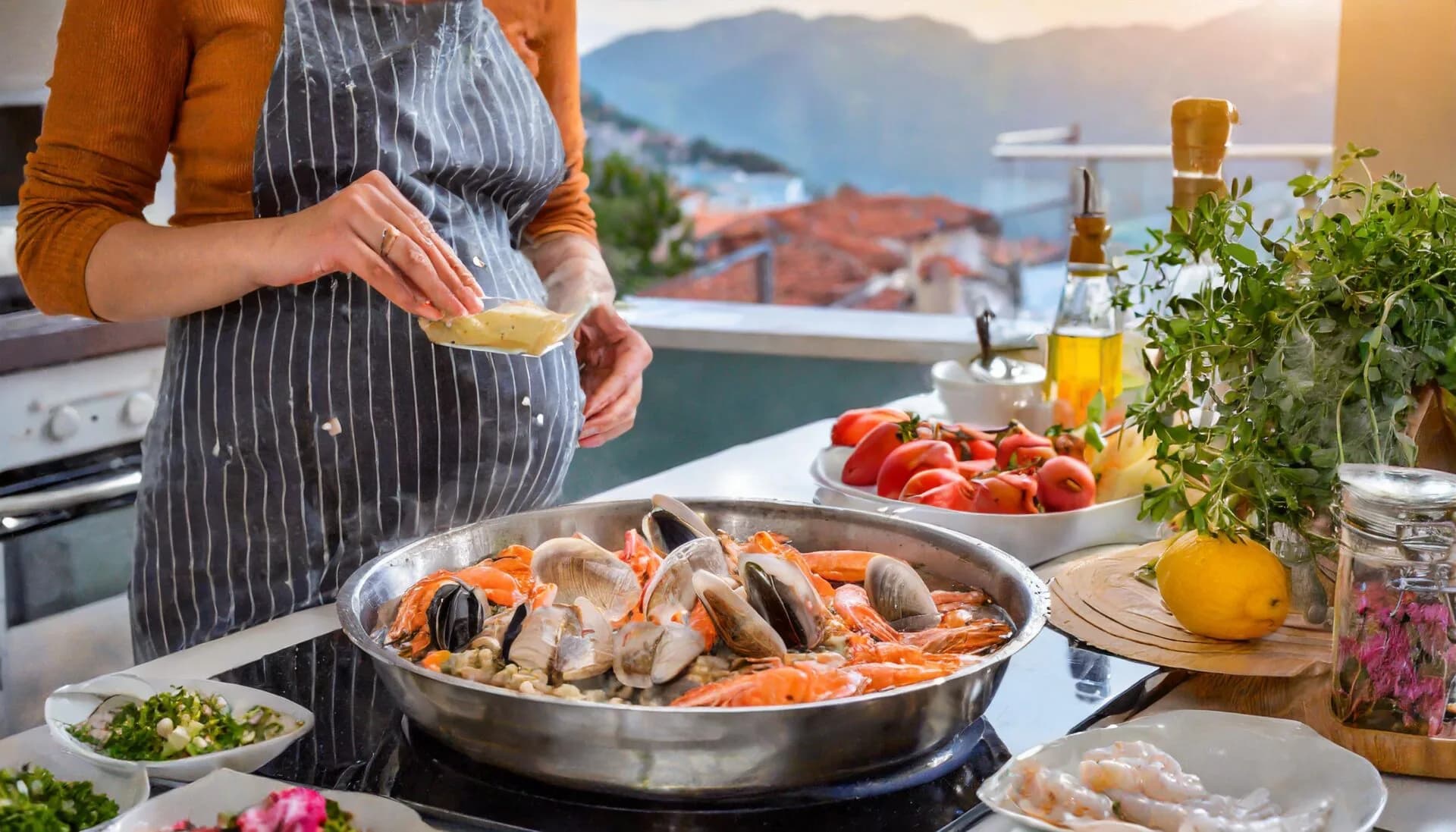
The most common seafood mistake in pregnancy is not eating the wrong fish. It is eating no fish, out of a vague sense that it is risky.
Fish is one of the few foods where official guidance actively tells pregnant people to eat more, not less. The FDA and EPA recommend 8 to 12 ounces (2 to 3 servings) per week of lower-mercury fish during pregnancy and breastfeeding. Fish is the primary dietary source of DHA, an omega-3 fatty acid that fetal brain and eye development depend on, and it delivers high-quality protein, iodine, selenium, and vitamin D.
The mercury question, in proportion
Mercury is a genuine concern for a small number of species, and irrelevant for most.
Methylmercury accumulates up the food chain, so the highest concentrations are in large, long-lived predatory fish. The species pregnant people are told to avoid are avoided because they sit at the top of that chain — not because fish in general is dangerous.
Avoid entirely during pregnancy
- Shark
- Swordfish
- King mackerel
- Tilefish (Gulf of Mexico)
- Marlin
- Orange roughy
- Bigeye tuna
Eat 2–3 servings a week — the "Best Choices"
Low in mercury, and where the benefit clearly outweighs the risk:
- Salmon — the single best option: low mercury, high DHA
- Shrimp — among the lowest-mercury seafood there is
- Canned light tuna (not albacore)
- Sardines, anchovies, herring — small, short-lived, high in omega-3
- Cod, tilapia, catfish, pollock, haddock, flounder, sole
- Scallops, oysters, clams, crab, lobster, squid
- Freshwater trout
One serving a week — the "Good Choices"
- Albacore ("white") tuna — meaningfully higher in mercury than light tuna
- Halibut, mahi-mahi, snapper, grouper, monkfish
- Yellowfin tuna, Chilean sea bass
Locally caught fish
For fish caught recreationally in Illinois waters, check the state advisory rather than assuming. If no advisory information is available, limit it to one serving that week and eat no other fish.
Is shrimp safe in pregnancy?
Yes — shrimp is one of the best choices available. It is consistently among the lowest-mercury seafood, high in protein, and low in fat. There is no reason to avoid it.
The only requirements are the ones that apply to any shellfish: it must be thoroughly cooked — opaque and firm, not translucent — and it must not be raw or part of a cold, ready-to-eat seafood salad.
Can you eat a seafood boil while pregnant?
Yes, with two caveats, because a boil is one of the safer ways to eat seafood: everything in the pot is cooked through by definition.
- Everything must be fully cooked. Shrimp opaque and curled; crab and lobster shells bright red with firm, opaque meat; clams and mussels open — discard any that stay shut.
- Watch the sodium. This is the real issue with a boil, and it is rarely mentioned. Boil seasoning is extremely salty, and that matters if you have high blood pressure, swelling, or preeclampsia risk. Go easier on the broth-soaked potatoes and sausage than you otherwise might.
Andouille or other sausage in the pot is fine as long as it is cooked through and served hot.
What to avoid regardless of species
The bigger pregnancy risk is not mercury — it is Listeria and other foodborne infection, which crosses the placenta and can cause miscarriage, stillbirth, and severe neonatal illness.
- Raw or undercooked seafood — sushi with raw fish, sashimi, ceviche, raw oysters, raw clams. Cooked sushi rolls and vegetable rolls are fine.
- Refrigerated smoked seafood — lox, nova, kippered or jerky-style fish, unless heated until steaming or used as an ingredient in a cooked dish. Shelf-stable and canned smoked fish is fine.
- Refrigerated seafood salads from a deli counter.
- Cook fish to 145°F, until it flakes and is opaque throughout.
Myths worth retiring
"Avoid all fish to be safe." The advice that does the most harm. Low fish intake in pregnancy is associated with poorer neurodevelopmental outcomes than moderate intake of low-mercury fish. The FDA revised its guidance specifically because people were over-restricting.
"All tuna is off-limits." Canned light tuna is a Best Choice at 2–3 servings a week. Albacore is the one to limit to one serving.
"Shellfish is high in mercury." Shrimp, scallops, oysters, clams, and crab are all low-mercury.
"Farmed salmon is unsafe." Both farmed and wild salmon are low-mercury Best Choices. Farmed is often higher in omega-3 by weight.
"Fish oil supplements are equivalent." Supplements provide DHA but not the protein, iodine, selenium, and vitamin D. They are a reasonable fallback if you genuinely cannot eat fish — not a preferred substitute. If you take one, choose a purified product and tell your provider.
"You can make up a week's fish in one sitting." Mercury clears slowly; spread intake across the week rather than eating a large amount at once.
The short version
Eat 2 to 3 servings a week of salmon, shrimp, sardines, canned light tuna, cod, or tilapia. Cook it thoroughly. Skip shark, swordfish, king mackerel, tilefish, marlin, and bigeye tuna. Keep albacore to once a week. Skip raw fish and refrigerated smoked fish.
Talk to us about your pregnancy nutrition
Medical disclaimer
This article is general health information, not medical advice for any individual. Dietary needs vary, particularly with gestational diabetes, high blood pressure, or a history of preeclampsia. If you have eaten a high-mercury fish or a raw seafood dish and are worried, tell your provider — a single exposure is very unlikely to cause harm, but it is worth mentioning rather than worrying about alone.